
Dental implants have earned a reputation as the closest thing modern dentistry offers to a permanent replacement for a missing tooth. That reputation is mostly deserved, but it also raises a reasonable question: how long do implants last in real life, and not just on a brochure?
The honest answer comes in two parts. The titanium post that anchors an implant in your jawbone can last for decades, and in many cases for the rest of your life. The visible crown on top, the part that does the chewing and shows when you smile, has a shorter timeline and may eventually need to be replaced. Knowing the difference between these two components is the key to setting realistic expectations.
At West Orange Dental Studio in Oakland, FL, we can place and restore implants under one roof. That means we follow each case from the first scan all the way through long-term maintenance. Below is what genuinely determines how long an implant lasts, along with the habits that help you land on the high end of that range.
An Implant Has Two Parts, and They Age Differently
When people picture a dental implant, they usually imagine a single object. In reality, a completed implant is a small system with distinct parts, and each part has its own lifespan.
The implant post (the part that lasts longest)
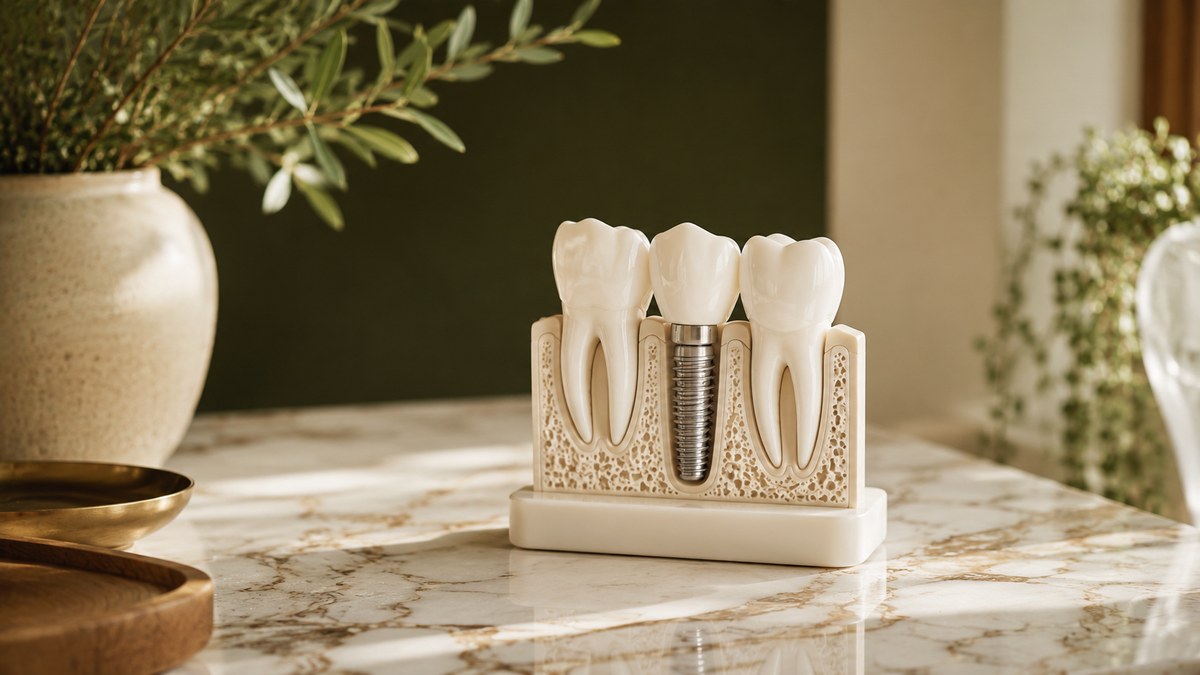
The implant post, sometimes called the fixture, is a screw-shaped piece of titanium or titanium alloy that’s placed into the jawbone. Over a few months, bone grows around and fuses to its surface in a process called osseointegration. Once that fusion is complete, the post becomes a stable, permanent foundation. Because titanium is biocompatible and doesn’t decay the way a natural tooth root can, the post itself is built to last for decades.
The abutment and crown (the parts that may need replacement)
The abutment is a connector that sits on top of the post, and the crown is the tooth-shaped cap that attaches to it. The crown is usually made of porcelain or zirconia. These materials are strong and natural looking, but they still face daily wear from chewing, and they can chip or loosen over many years of use. Most crowns hold up well for a long time, but the crown is the component most likely to need attention before the post does.
What the Research Says About Implant Survival
So how long do implants last according to actual data? Large reviews of long-term outcomes consistently report high survival rates. Many studies find that well-placed implants remain successful in roughly 90 to 95 percent of cases at the ten-year mark, and a meaningful share continue to function well beyond twenty years. The American Dental Association recognizes implants as a safe, effective, and well-documented option for replacing missing teeth.
It helps to read those numbers carefully. A survival rate describes how many implants are still in place and functioning, not how many never needed any maintenance along the way. An implant can be a long-term success even if its crown was refreshed at some point. The post staying put is the headline, and routine upkeep of the visible parts is normal.
What Actually Determines How Long Your Implant Lasts
Two people can receive nearly identical implants and end up with very different timelines. The variables below explain most of that gap.
Daily oral hygiene and gum health
The single biggest threat to a long-lasting implant is peri-implantitis, an inflammatory condition that affects the gum and bone around the implant. It’s essentially the implant version of gum disease, and it’s largely preventable. Brushing twice a day, cleaning between your teeth, and keeping up with professional cleanings all protect the bone that holds your implant in place, and our guide to caring for implants long term covers the daily routine in detail.
Bone quality and quantity
An implant needs enough healthy bone to anchor into. Patients who have lost significant bone after a missing tooth may benefit from a bone graft before placement, one of the factors an implant candidacy evaluation reviews. Starting with a solid foundation gives the implant the best possible chance to integrate fully and stay stable for the long haul.
Bite force and teeth grinding
Implants handle normal chewing very well, but chronic clenching or grinding, known as bruxism, puts extra stress on the crown and the connection beneath it. If you grind your teeth, a custom night guard can absorb that force and meaningfully extend the life of your restoration.
Smoking and overall health
Smoking reduces blood flow to the gums and slows healing, which raises the risk of implant complications and failure. Conditions such as poorly controlled diabetes can have a similar effect. Managing these factors before and after placement improves both the odds of success and the lifespan of the implant.
The skill behind placement and restoration
Precise planning matters. Accurate imaging, correct positioning, and a well-fitted crown all reduce stress on the implant over time. This is one reason we use CBCT imaging and digital scanning to plan each case, and why placing and restoring implants in the same studio keeps the entire process under one coordinated standard of care.
How to Help Your Implant Last as Long as Possible
You have real influence over where your implant lands within that wide range. A few consistent habits make the difference:
- Brush twice daily and clean between your teeth every day, paying attention to the gum line around the implant.
- Keep your regular dental visits so the implant, gums, and bite can be checked and professionally cleaned.
- Wear a night guard if you grind or clench your teeth.
- Avoid using your teeth as tools, and go easy on very hard foods like ice and unpopped popcorn kernels.
- Avoid smoking, which is one of the most controllable risk factors for implant problems.
- Report any looseness, discomfort, or gum changes promptly, since early attention usually means a simpler fix.
Signs Your Implant or Crown May Need Attention
A healthy implant should feel stable and comfortable, and it shouldn’t draw your attention day to day. Reach out to a dentist if you notice any of the following:
- A crown that feels loose, shifts, or clicks.
- Gums around the implant that are red, swollen, or tender.
- Bleeding around the implant when you brush or floss.
- A visible chip or crack in the crown.
- Any sensation that the implant itself is moving.
Most of these issues are straightforward to address when caught early, and many involve the crown rather than the post. The sooner they’re evaluated, the more likely the underlying implant stays exactly where it belongs.
Ready to talk about your options
If you’re weighing a dental implant, or you already have one and want to keep it healthy for decades, we would be glad to help you think it through. West Orange Dental Studio is opening in 2026 and building a VIP list for patients who want to be first in line. Reach out to start the conversation or to join the list, and we’ll help you map out a plan built around your smile.