

The best way to choose a new dentist is to judge each practice on things you can check before you ever sit in the chair: who owns it, who’ll be treating you, what’s done in-house, how fees are explained, and how the first visit is built. Location and insurance matter, but they’re the first filter, not the decision. If you’re looking for a new dentist near Oakland, FL, the same checklist works for every office on your list.
We’re West Orange Dental Studio, an independently owned general and family practice preparing to open in fall 2026 at our Oakland, FL studio serving Winter Garden, Clermont, and the surrounding areas. This checklist works on any practice, including ours. We’ve noted our own answers where they help, but the questions are the point.
Who Owns the Practice, and Why Continuity Matters
Continuity of care is the ongoing relationship between you and a dental team that knows your history, so each visit builds on the last instead of starting over. A dentist who has followed a small crack or a shallow gum pocket over several years can tell stable from changing, which is hard to judge from a single set of x-rays.
Ownership shapes continuity, and it’s easy to check. Practices in the area include independently owned offices and offices affiliated with larger dental groups. To learn which one you’re looking at:
- Ask the front desk who owns the practice and whether it’s part of a group.
- Read the about page, and notice whether the same name and branding appear at many locations.
- Check Florida’s public business records, which list the entity that registered the practice.
West Orange Dental Studio is owned by Dr. Clayton Little, DMD, and isn’t part of a corporate dental group or DSO. Decisions about appointment length, materials, and scheduling are made in the studio.
Credentials and Training: General Dentist or Specialist
A general dentist is a dentist who provides the broad range of care most families need, from cleanings and fillings to crowns, root canals, and often extractions and implants. A specialist has completed additional formal training in one of the specialties recognized by the American Dental Association, such as orthodontics, oral surgery, or periodontics, and usually sees patients by referral.
For a general dentist, a few things tell you about training beyond dental school:
- A residency. An Advanced Education in General Dentistry (AEGD) program or a General Practice Residency adds at least a year of supervised clinical training.
- Ongoing education. Florida requires continuing education to renew a dental license, and membership in the Academy of General Dentistry reflects a commitment to keep learning.
- License status. The Florida Department of Health lets anyone look up a dentist’s license online.
Dr. Little earned his DMD at the Medical University of South Carolina, completed a one-year AEGD residency at Naval Hospital Camp Lejeune, where he was named Resident of the Year, and served five years as a Navy dentist. His full background is on the meet the doctor page. He’s a general dentist, not a specialist, and he’ll tell you when a specialist is the better choice.
What Is Done In-House and What Gets Referred
Every general practice draws its own line between what it treats and what it refers. Neither answer is wrong, but it changes how many offices you’ll visit and how many people need to share your records. Ask about the treatments you think you’ll need, since root canals, wisdom teeth, implants, and clear aligners are where practices differ most.
In our studio, Dr. Little provides root canals, extractions, Invisalign for adults and teens, and single and multiple dental implants planned in 3D and placed with guided surgery. Whether a particular wisdom tooth is treated in-house is decided at an exam with 3D imaging, and full-arch implant placement is coordinated with an oral surgeon. The complete list is on our services page.
The Technology Behind the Diagnosis
Equipment doesn’t make a dentist good, but some tools change what you can see and how precisely treatment is planned. Two are worth asking about:
- Digital scanning replaces impression trays with a scanner that builds a 3D model of your teeth while you watch. We use iTero.
- CBCT 3D imaging is a low-dose 3D x-ray that shows bone, nerves, and sinus position, which matters for implant and surgical planning.
The better question isn’t “do you have it?” It’s “will you show me what you’re seeing?” A plan you can see is easier to trust.
Insurance, Membership, and Written Fees
Plans differ even within one carrier, so the reliable answer comes from your actual plan rather than a list. West Orange Dental Studio is in network with many PPO dental plans, and you can text or email a photo of your benefits card so the studio can verify it before your first visit. Out-of-network patients are welcome too. We don’t accept Medicaid.
If you don’t have dental insurance, ask whether the practice offers an in-house plan, and see our explainer on what a dental savings plan is for how those plans compare. Ours is laid out on the membership page: one price that includes preventive visits and takes a discount off other treatment, with no deductible and no annual maximum.
Whatever the payment route, ask for a written treatment plan with fees before treatment begins. Each of our treatment pages publishes a typical fee range, and exact fees are confirmed in writing before anything starts.
Comfort Options and Emergency Access
What comfort options are available? If dental visits make you tense, ask what’s offered beyond local anesthetic. We provide nitrous oxide, which wears off within minutes so you can drive yourself, and minimal oral sedation, a single tablet taken about an hour before the visit that requires a driver both ways.
What happens in an emergency? Ask whether the practice holds time for urgent cases. Once we open, we’ll hold room in the daily schedule for emergency dental care. It also helps to know how to tell a true dental emergency from one that can wait. Swelling that affects the eye, throat, breathing, or swallowing is an emergency room situation, not a dental appointment.
A Fit for the Whole Family
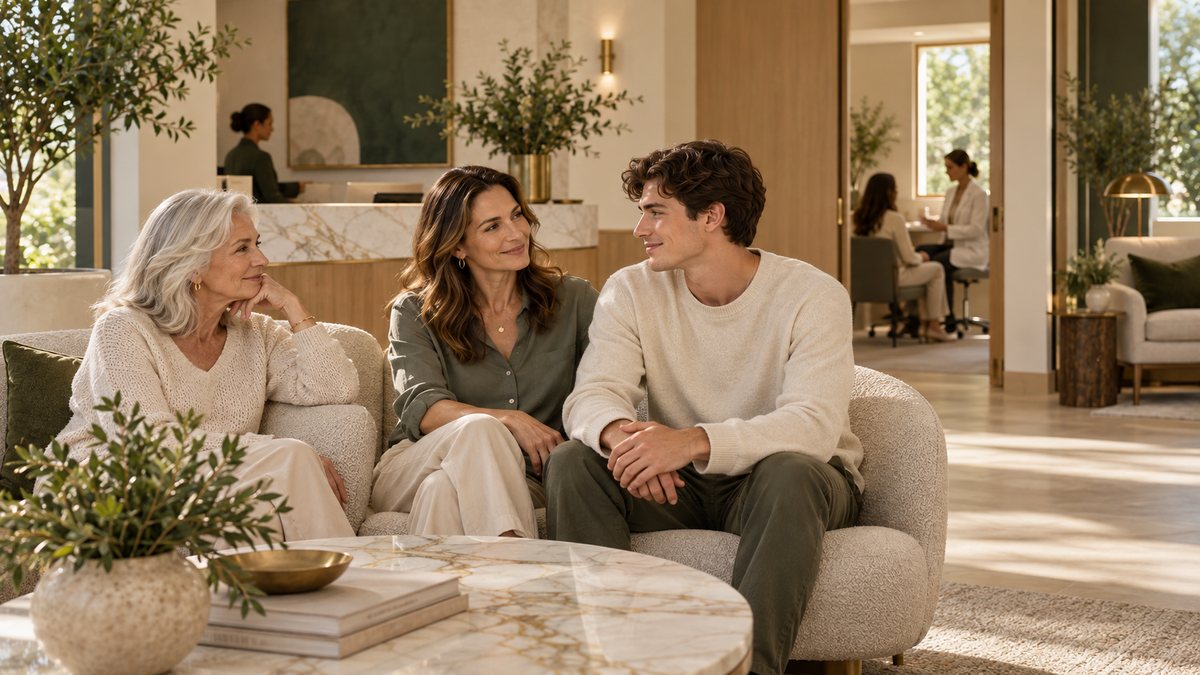
If you’re choosing for a household, check the ages the practice sees. One office for parents and kids means one set of records, one drive, and visits that can sit back to back. We see children from age three and up, along with teens and adults, and you can read more about who we serve. Children under three are best served by a pediatric dentist.
Commute and Location Near Oakland
Think about where your week actually runs. If your commute heads east on W Colonial Drive toward the 429 or Florida’s Turnpike, an office along that line fits easily before or after work.
Our studio is in the Oakland Exchange development off W Colonial Drive. If you live in town, our Oakland page covers the short trip from nearby neighborhoods, and from downtown Winter Garden it’s about an 8 minute drive west.
How to Read Dental Reviews Critically
Reviews are useful, and they’re easy to over-read. A few habits help:
- Look for patterns. One glowing or furious review says little. The same comment repeated says more.
- Read the specifics. Mentions of clear explanations, wait times, and billing tell you more than a star rating.
Because West Orange Dental Studio hasn’t opened, there aren’t patient reviews of the studio to read yet. Until there are, the fairest way to judge us is by what we publish about how we work, and by what you experience at your first visit.
How the First Visit Is Structured
The first visit shows you how a practice thinks. Ask how long it lasts and what’s included. Our step-by-step guide to a first visit at West Orange Dental Studio shows ours in detail.
When our books open, the first visit is planned for about two hours with the cleaning included: a warm welcome, a full-mouth 3D digital scan, an unhurried exam with Dr. Little, a routine cleaning or a deeper cleaning where periodontal disease is found, and a review where we walk through the findings and build the plan together.
Red Flags When Choosing a New Dentist
- Pressure to decide on the spot, especially for large or elective treatment.
- Vague pricing, or reluctance to put fees in writing.
- Findings you can’t see. You should be able to say “show me” and get an answer.
- No discussion of alternatives, including monitoring instead of treating.
A second opinion is always reasonable.
Ready to Choose a Dentist Before You Need One
The easiest time to choose a dentist is before a toothache makes the choice for you. Our studio is preparing to open in fall 2026 and forming its patient family now. Join the VIP list, and we’ll reach out when our books open so you can bring this checklist to your first visit.