

Bonding and veneers overlap so much that patients often assume they’re two names for the same thing. They’re not. Dental bonding is composite resin sculpted directly onto your tooth in a single visit, at a lower cost, usually with little or no enamel removed. A porcelain veneer is a thin shell fabricated in a laboratory and cemented to a prepared tooth, lasting roughly twice as long with much better color stability.
The short version of veneers vs bonding: for one chipped or worn tooth, bonding is usually the right first move. For six to ten teeth changing shape and color together, porcelain usually wins. Almost every case we see at our Oakland, FL studio falls clearly on one side or the other once you look at how many teeth are involved and how permanent you want the answer to be.
There’s no single winner here. What follows is each factor that actually separates them, so you can see which side your own situation lands on.
What Each Treatment Actually Is
The materials and the method are the root of every other difference.
Bonding uses tooth-colored composite resin, the same class of material we use for tooth-colored fillings. The enamel is lightly conditioned, resin is layered on and cured with a light, then the tooth is sculpted and polished by hand. Everything happens in your mouth, in one appointment, with no laboratory involved.
A veneer is a thin shell, usually porcelain, made outside the mouth to fit a specific tooth. A small amount of enamel is removed so the shell sits flush rather than bulky, an impression or digital scan is taken, temporaries go on, and the finished veneer is bonded in place two to three weeks later.
That one structural difference, sculpted in place versus fabricated elsewhere, drives the cost, the timeline, the durability, and the permanence.
Cost
Bonding is the less expensive treatment per tooth, commonly a third to a half of what porcelain costs. The reason isn’t quality alone. A veneer fee covers laboratory fabrication, two appointments, temporaries, and a more demanding preparation.
The lifetime math is closer than the sticker price implies. Bonding replaced twice over fifteen years starts to approach the cost of a single veneer that lasted the whole time. That’s not an argument for porcelain by itself, but it’s worth knowing before you treat the price gap as the deciding factor.
Lifespan and Durability
Porcelain is harder, denser, and more wear resistant than composite. Veneers commonly last ten to fifteen years, sometimes beyond twenty, and how long porcelain veneers last depends heavily on grinding and on how the edges were designed. Bonding usually runs four to eight years before it needs repair, repolishing, or replacement.
The failure modes differ too:
- Bonding chips and can be repaired. A small chip is often added to and repolished in one short visit, without remaking the whole restoration.
- Porcelain fractures and must be remade. Porcelain is strong until it’s not. When a veneer breaks, the laboratory process starts over.
Neither material forgives an unmanaged grinding habit. If you clench at night, a nightguard is part of the treatment, not an optional add-on.
How Much Tooth You Give Up
This is the difference that gets underweighted most often, and the one we spend the most chair time on.
Bonding frequently requires no enamel removal. That makes it one of the very few cosmetic treatments that can be undone. Take the composite off and the tooth is what it was.
Veneers can require permanent enamel reduction, though no-prep veneers are possible in certain cases. When the tooth is prepared, it’s a thin layer, but enamel doesn’t regenerate. A prepared tooth will need a veneer or a crown for the rest of its life. That’s a reasonable trade for the result porcelain delivers, and it’s a trade worth making with full information rather than by default.
For anyone young, undecided, or simply not ready to commit, that asymmetry usually settles the question on its own.
Appearance
Skilled bonding on a single tooth can be nearly indistinguishable from natural enamel. Composite comes in multiple shades and opacities, and a well-layered restoration mimics the way a real tooth changes character from gum line to edge.
Porcelain pulls ahead in two specific places:
- The incisal edge. Natural enamel is nearly translucent at the biting edge of a front tooth. Porcelain reproduces that optical depth better than composite does.
- Across multiple teeth. When six or eight teeth must match one another exactly, laboratory fabrication under controlled conditions beats freehand sculpting done one tooth at a time.
Porcelain also holds its polish. Composite gradually dulls, and the margin where it meets the tooth is where staining shows first. Our comparison of porcelain and composite veneers goes deeper on where that optical difference shows and where it doesn’t.
Stain Resistance
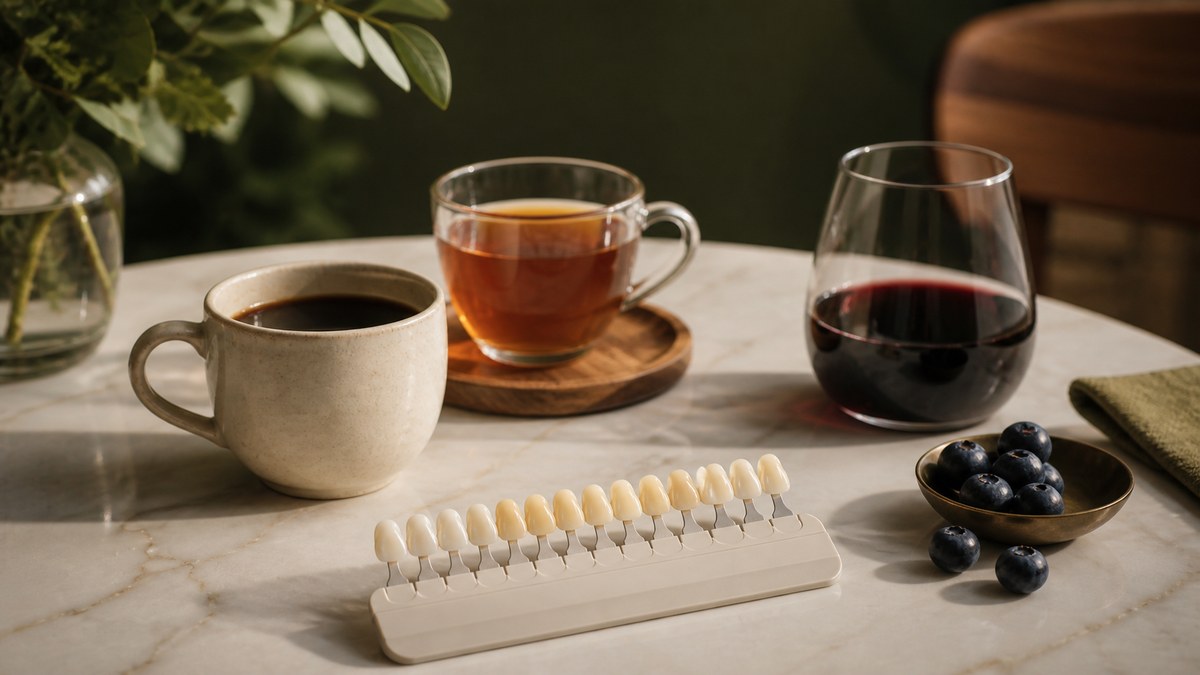
Glazed porcelain is essentially nonporous and keeps its color for the life of the restoration. Composite is porous enough that coffee, tea, red wine, and tobacco discolor it over the years.
One rule applies to both: neither material responds to whitening gel. Pigment is built into composite and fired into porcelain. Whiten your natural teeth first, let the shade settle for a couple of weeks, then have the restoration matched to the final result. Doing it in the other order locks you into your current shade.
When Bonding Is the Better Choice
- A single chipped or fractured edge.
- A small gap between two teeth.
- A peg-shaped or undersized lateral incisor.
- An exposed root surface at the gum line after recession.
- A younger patient whose smile will keep maturing.
- Anyone who wants to try a new shape before committing to something permanent.
- A budget that makes porcelain unrealistic right now, with the option to upgrade later.
Our full breakdown of what dental bonding fixes covers each of these cases in more detail.
When Veneers Are the Better Choice
- Multiple front teeth changing color and shape together.
- Deep intrinsic discoloration that whitening won’t touch.
- Teeth already heavily restored on their visible surfaces.
- Worn edges from years of grinding, once the grinding is controlled.
- Any case where longevity and stain resistance outrank cost and reversibility.
Choosing Without Guessing
The honest way to decide is to count the teeth and be clear about permanence. One tooth, minor problem, want it undoable: bonding. Several teeth, color and shape both wrong, want it to hold for a decade or more: porcelain. When the real complaint is crowding or a gap rather than color or shape, what clear aligners can and cannot fix is the better place to start.
Sequence matters as well. Whitening comes before either one, alignment before both, and cosmetic work last, though aligners only deliver that head start when they’re worn the 20 to 22 hours a day the plan assumes. Our overview of how a smile makeover is planned lays out that order and explains why doing it backward is the most expensive mistake in cosmetic dentistry.
Ready to Find Out Which One You Need
Bring us the tooth that has been bothering you and we’ll tell you plainly which treatment fits, including when the answer is that neither one is necessary yet. Reach out to schedule a consultation, or join our VIP list to stay connected with the studio.