
Porcelain veneers usually last ten to fifteen years, and a well-cared-for set frequently passes twenty. That range isn’t a hedge. It reflects real variation in how hard people bite, whether they grind at night, how healthy their gums stay, and how carefully the margins are kept clean.
The question behind the question is normally about value. A veneer is a significant investment, and the answer to how long do veneers last matters more than almost any other detail when you’re deciding whether to go ahead. The reassuring part is that most of the variables are within your control, not decided the day the porcelain is cemented.
Here’s what the lifespan actually depends on, what makes veneers fail early, and what the maintenance looks like over a decade or two at our Oakland, FL studio.
What the Long-Term Evidence Shows
Porcelain veneers have decades of clinical follow-up behind them, which is unusual for a cosmetic treatment. Across long-term studies, the large majority of bonded ceramic veneers remain in service at the ten-year mark, and substantial numbers are still functioning well past fifteen.
Two things stand out in that literature. First, veneers bonded mostly to enamel outperform veneers bonded to dentin, which is an argument for conservative preparation on a tooth that hasn’t been heavily restored before. Second, the failures cluster in patients who grind. Neither finding is surprising, and both are actionable.
The Three Ways Veneers Fail
Almost every veneer that comes out early does so for one of these reasons.
- Fracture of the porcelain. Ceramic handles compression well and point loads poorly. Ice, fingernails, pens, and popcorn kernels are the classic culprits. Grinding is the chronic version of the same problem.
- Debonding. The veneer comes off intact. This traces back to the quality of the bonded surface, the amount of enamel available to bond to, and shear forces from the bite.
- Decay at the margin. The veneer doesn’t fail; the tooth under it does. Plaque left sitting where porcelain meets enamel produces a cavity that undermines the whole restoration.
Notice that two of the three are behavioral. That’s good news, because it means the outcome isn’t a lottery.
Grinding Is the Biggest Single Factor
If you clench or grind, that habit will do more to determine your veneer lifespan than the ceramic system, the laboratory, or the cement. Bruxism loads porcelain in the exact direction it tolerates least, repeatedly, for hours a night.
The response is a custom nightguard, made after the veneers are seated and worn consistently. We treat it as part of the treatment rather than an accessory. Skipping it can cut the service life of a veneer roughly in half, and a fractured veneer can’t be patched the way composite bonding can. It’s remade from scratch.
If you have obvious wear on your front edges, that wear is itself evidence of grinding, and it needs addressing before porcelain goes on rather than after.
Gum Health Decides the Margin
The margin is where a veneer meets your tooth, and it usually sits at or just under the gum line. Everything that keeps that margin clean extends the restoration’s life.
Inflamed gums bleed, recede, and expose the junction between porcelain and tooth. Once that junction is visible and plaque sits on it, you have both an aesthetic problem and a decay risk. Routine cleanings aren’t a formality here. They’re the maintenance schedule for the restoration.
Recession over many years can also expose root surface above the veneer edge, which is one of the more common reasons an otherwise intact veneer is eventually replaced for appearance rather than function.
Why Veneers Can Look Different Without Changing
Porcelain holds its shade. What surrounds it doesn’t.
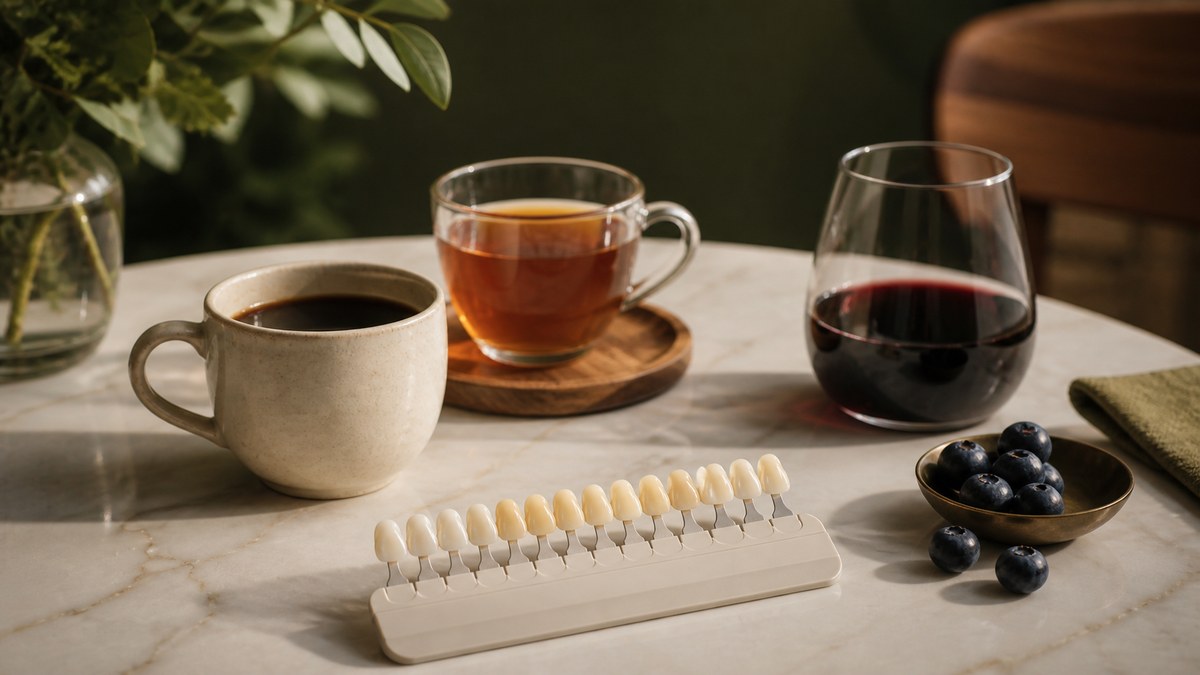
Your natural teeth continue to darken slowly with age and diet, so a veneer matched perfectly at placement may look brighter than its neighbors after ten years. The thin line of composite cement at the margin can also pick up stain. Neither is a defect in the veneer.
This is also why whitening comes first, always. Neither porcelain nor composite responds to whitening gel, so the shade you arrive at before treatment is the shade the laboratory matches. Our rundown of teeth whitening options covers how to establish that baseline before any cosmetic work begins.
What You Can Control Before the Veneers Go On
Several decisions made before any porcelain is ordered have more influence on lifespan than anything you do afterward.
- How much enamel is preserved. Bonded ceramic performs measurably better against enamel than against dentin. A conservative preparation on a tooth that hasn’t been heavily restored gives the strongest possible foundation.
- Whether the bite is corrected first. A veneer placed on a tooth taking an uneven or excessive load will fail early no matter how well it’s made. Adjusting how the teeth meet is part of the treatment, not an afterthought.
- Whether the gums are healthy at the start. Bonding to an inflamed, bleeding margin compromises the seal from day one.
- Whether crowding is addressed. Using porcelain to camouflage teeth that are significantly out of position produces thicker, more vulnerable shells. Moving the teeth first allows thinner, stronger veneers.
None of this is exciting, and all of it shows up ten years later.
What Maintenance Actually Involves
The routine is unglamorous and effective.
- Brush twice daily with a nonabrasive paste. Whitening toothpastes with heavy abrasives dull the glaze over time, and once the glaze is scratched the surface picks up stain more readily.
- Floss every margin, every day. The tooth under the veneer can still decay. This is the step that prevents it.
- Keep your cleaning schedule. Hygienists use instruments and pastes that are safe around ceramic margins.
- Wear the nightguard. Every night, not on the nights you remember.
- Stop using your front teeth as tools. Packaging, bottle caps, thread, fingernails.
- Report roughness or sensitivity early. A small marginal issue caught at a checkup is far cheaper than a remake.
Replacement Is Part of the Plan
A veneer is a restoration, and every restoration has a service life. Planning for eventual replacement isn’t pessimism, it’s accurate budgeting.
Worth knowing before you start: replacing a veneer often means removing a thin additional layer of tooth to seat the new shell cleanly. Over two or three replacement cycles that adds up, which is the strongest argument for the most conservative preparation the case allows the first time around. It’s also part of why we walk through the trade-offs in veneers versus bonding before anyone commits to porcelain.
Ready to Talk About Whether Veneers Fit
If you’re weighing veneers, the useful conversation covers your bite, your grinding history, and your gum health, not just the shade guide. Reach out to schedule a consultation and we’ll give you an honest read on how long a set would likely serve you, or join our VIP list to stay connected with the studio.