

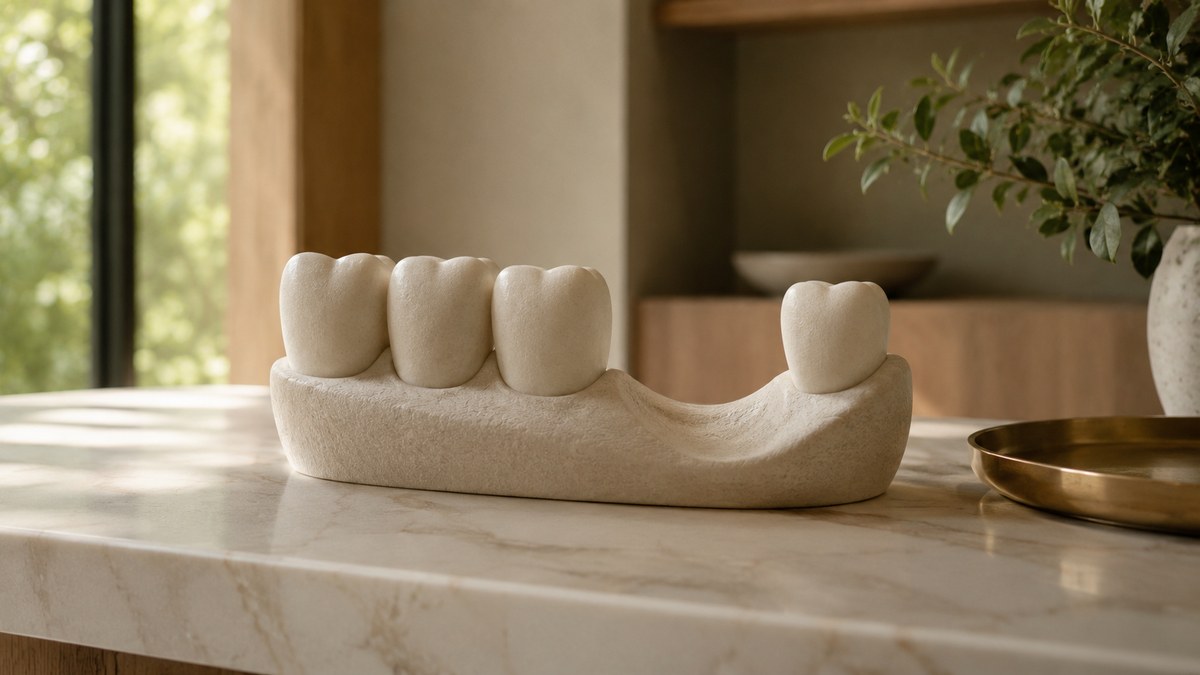
The short answer is that the jawbone after tooth removal begins to shrink, and it starts sooner than most people expect. The bone that once anchored your tooth exists to do a job. When the tooth is gone, the stimulation of chewing disappears with it, and the body starts reclaiming the bone it no longer thinks it needs. Most of that change happens quietly, without pain, in the first year.
This matters because bone is the foundation for everything we might do later, from implants to the way your face holds its shape. The good news is that bone loss is predictable, and there are proven ways to slow it, prevent it, or rebuild what has been lost. Our Oakland, FL studio plans every extraction with this future in mind.
Why the Jawbone Changes After Tooth Removal
Bone is living tissue that constantly remodels itself in response to use. The ridge of bone that holds your teeth, called the alveolar bone, exists specifically to support tooth roots. Every time you bite and chew, the root transmits gentle forces into that bone, which signals the body to keep it dense and full.
Bone resorption is the process by which the body breaks down and absorbs bone tissue it no longer considers necessary. Once a tooth is removed, the alveolar bone in that spot loses its purpose, and resorption begins. This isn’t a malfunction. It’s the body being efficient. Unfortunately, that efficiency works against your future smile.
How Fast Does Bone Loss Happen?
The timeline is front-loaded. Changes begin within the first few weeks after an extraction, and the fastest loss occurs during the first three to six months. Research on ridge healing consistently shows that a substantial portion of the ridge width, often described as a quarter or more, can be lost within the first year. After that first year, resorption slows down but continues gradually for the rest of your life if nothing replaces the stimulation.
Width tends to go first, making the ridge narrower, and height follows. The pattern varies from person to person and from one part of the mouth to another. The back of the lower jaw, for example, behaves differently than the front of the upper jaw. Factors like gum disease before the extraction, smoking, and certain medical conditions can accelerate the process. Osteoporosis and the bone medications that treat it belong in that conversation too, ideally before the extraction is planned. This remodeling runs alongside the surface healing described in our guide to how long it takes to heal after an extraction.
What Bone Loss Means Beyond the Missing Tooth
A shrinking ridge affects more than the empty space itself:
- Neighboring teeth can slowly tip or drift into the gap, changing your bite and making cleaning harder.
- Facial support depends partly on the jawbone. As bone volume decreases, the lips and cheeks lose some of their scaffolding, which can create a sunken appearance over time, especially when several teeth are missing.
- Future treatment options narrow as bone disappears. A site with generous bone accepts an implant easily. A site that has resorbed for years may need rebuilding first.
- Denture fit suffers as the ridge flattens, which is one reason long-term denture wearers often struggle with looseness.
None of this happens overnight, and none of it means a missing tooth is a crisis. It simply means the decision about what to do next has a timeline attached.
How to Preserve the Bone
Socket preservation at the time of extraction
The simplest window to protect bone is the day the tooth comes out. Socket preservation places bone graft material directly into the empty socket, holding the ridge’s shape while it heals. It adds only a few minutes to the extraction procedure and keeps the site in good condition for a future implant. If you already know you want to replace the tooth, this small step can save a larger grafting procedure later.
Replacing the tooth with an implant
A dental implant is the only tooth replacement that addresses bone loss at its root cause, literally. Because the implant sits in the bone and transmits chewing forces the way a natural root does, it gives the bone a reason to stay. Bridges and dentures restore the visible tooth but leave the bone beneath unstimulated. If you’re weighing options, our complete guide to dental implants walks through how they work and who they suit.
Rebuilding bone that is already gone
If a tooth has been missing for years and the ridge has shrunk, grafting can usually rebuild it. The graft acts as a scaffold that your own bone grows into and replaces over several months. We cover the details, materials, and healing timeline in our overview of bone grafting.
What If Your Tooth Was Removed Years Ago?
It’s rarely too late. We regularly evaluate sites that have been empty for five, ten, or twenty years. Some still have enough bone for an implant right away. Others need grafting first. The only way to know is to measure, which is where 3D imaging earns its keep. A CBCT scan shows the exact height, width, and density of your remaining bone, so the conversation is based on measurements rather than guesses.
The practical takeaway: if you have a missing tooth and have been putting off a decision, the cost of waiting is measured in bone. An evaluation now, even if you choose to treat later, tells you how much time you have.
Ready to Plan Ahead for a Missing Tooth?
Whether you have an extraction coming up or a gap that has been there for years, understanding what your jawbone is doing is the first step toward keeping your options open. We’re happy to take a look, explain what we see, and lay out the choices without pressure. Reach out with questions, or join our VIP list to stay connected as our studio opens.