

Teeth become sensitive when the layer protecting your dentin is lost or breached. Dentin is the softer tissue under your enamel, and it’s full of microscopic tubules that lead straight to the nerve. When enamel wears thin, gums pull back, or a crack or cavity opens a path, cold air, ice water, and sweets reach those tubules and the nerve reports it as a jolt. Nearly all teeth sensitivity causes come down to that one mechanism.
The reassuring part is that sensitivity is a symptom with a findable source, not a mystery you have to live with. The less reassuring part is that some of those sources, such as a crack or decay under an old filling, get worse quietly while you manage the discomfort with special toothpaste.
Below is what actually creates sensitivity, how to read what your teeth are telling you, and what helps at our studio serving Oakland and the surrounding communities in Florida.
What Sensitivity Actually Is
Tooth sensitivity, called dentin hypersensitivity, is a short sharp pain that fires when something reaches exposed dentin and fades quickly once the trigger is gone. The timing is the most useful clue you have. A jab that vanishes within a second or two suggests a surface problem. Pain that lingers for thirty seconds or more, throbs, or wakes you at night suggests the nerve inside the tooth is inflamed, which is a different and more urgent situation.
Healthy enamel is a sealed mineral shell with no nerve endings of its own. Nothing you eat should register. When it starts to, something has changed.
The Most Common Causes of Tooth Sensitivity
Acid wear on enamel
Enamel dissolves in acid, and it doesn’t grow back. Soda, sports drinks, citrus, wine, kombucha, and vinegary foods all drop the pH in your mouth, and frequency matters far more than volume. Sipping one soda across three hours is harder on enamel than drinking it in five minutes. Acid doesn’t have to arrive through your diet, either: reflux brings stomach acid up to the teeth, and dry mouth removes the saliva that would otherwise neutralize it.
Brushing too hard
Firm bristles and heavy pressure abrade enamel at the gumline and push the gums back at the same time. Notched, sensitive grooves right where tooth meets gum are one of the most common findings we see, and they’re almost always self-inflicted with good intentions.
Gum recession
When gums recede, they expose root surface covered by cementum, which is thinner and softer than enamel. That’s why recession often produces the sharpest cold sensitivity of all. Gum disease, clenching, aggressive brushing, and tooth position all contribute.
Grinding and clenching
Sustained force flattens chewing surfaces, flexes teeth at the gumline, and can crack enamel. People who clench often report waking with generalized sensitivity and a tired jaw that eases through the morning.
Cracks
A crack can produce sensitivity that’s oddly specific: fine with cold, sharp when biting a particular way, and hard to pin to one tooth. This pattern deserves attention, because cracks propagate. We wrote about the full picture in our guide to cracked tooth syndrome.
Decay and failing restorations
Decay reaching dentin produces sensitivity that focuses on one tooth and reacts strongly to sweets. An old filling whose seal has broken down does the same thing, often with no visible change on the surface, which is part of why fillings have a working lifespan. This is one reason the choice of restoration matters over the long run, which we cover in our comparison of white fillings and silver amalgam.
Recent dental work
New fillings, crowns, and deep cleanings all cause temporary sensitivity that settles over days to a few weeks. It should be improving, not worsening.
Whitening
Whitening gels briefly open the dentin tubules, so cold sensitivity for a day or two after treatment is expected and reversible.
Sensitivity That Means Something Is Wrong
Most sensitivity is a wear-and-tear story. Some of it’s a warning. Come in promptly if any of these fit:
- The pain lingers well after the cold or sweet is gone.
- Heat sets it off, which often indicates an inflamed or dying nerve.
- It’s one tooth, consistently the same one.
- You can’t bite on it without a sharp response.
- It wakes you up or throbs on its own.
- There’s swelling, a bad taste, or a bump on the gum near the tooth.
Those last few move the conversation from sensitivity to infection, and they overlap closely with the signs you may need a root canal. Nerve pain that goes quiet on its own isn’t a recovery, and understanding how decay progresses through the tooth explains why silence at that stage is the least reassuring sign of all.
What Actually Helps
For diffuse sensitivity from wear and recession, the practical steps are unglamorous and effective:
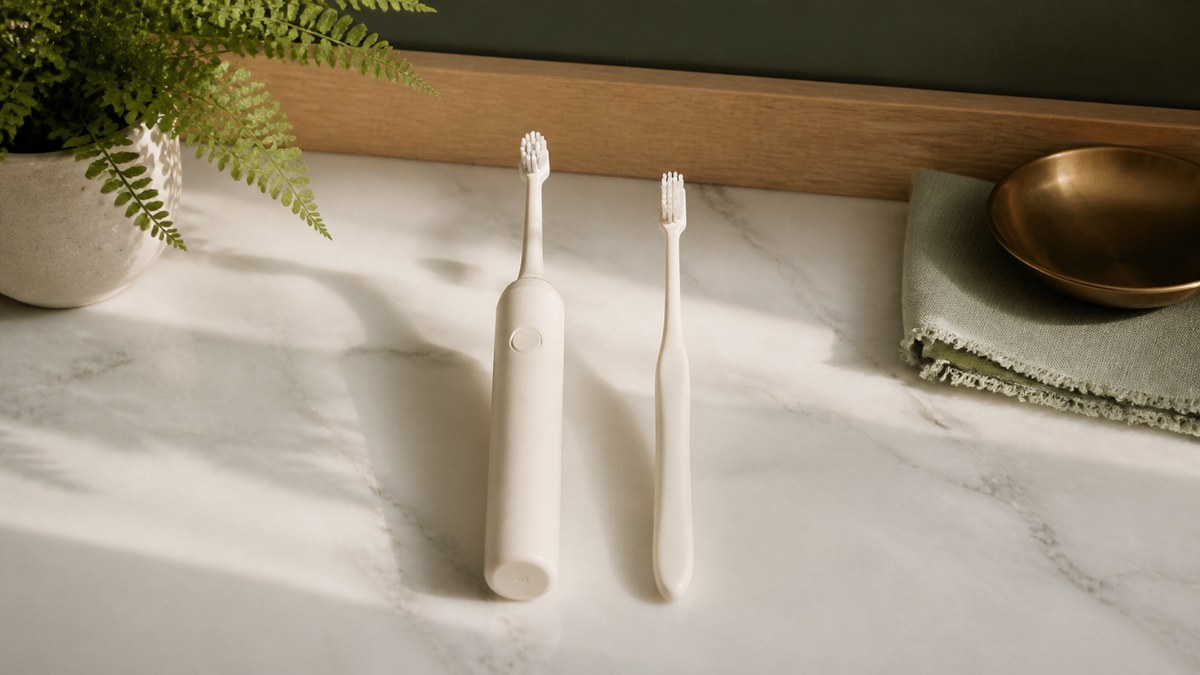
- Switch to a soft brush and lighten your grip. Hold the brush like a pencil, not a scrub brush. An electric brush with a pressure sensor helps if you tend to lean in.
- Give a sensitivity toothpaste a real trial. Potassium nitrate calms the nerve, stannous fluoride helps seal the tubules. Use it twice daily for two to four weeks before judging it, and try smearing a little on the sensitive spot at bedtime without rinsing.
- Change the acid pattern, not just the acid. Drink acidic things with a meal rather than sipping across the day, rinse with water afterward, and wait about thirty minutes before brushing so you’re not scrubbing softened enamel.
- Protect against clenching. A properly fitted nightguard spreads the load and prevents both the wear and the gumline flexing that causes it.
- Let us treat the causes we can fix. Fluoride varnish, bonded resin over notched areas, replacing a leaking filling, or sealing exposed root surfaces are all quick, conservative solutions that address the source instead of numbing the symptom.
What we would rather you not do is spend six months layering sensitive toothpaste over a cracked tooth or a cavity. The toothpaste works well enough to hide a problem that’s still progressing.
How We Track Down the Source
Finding the cause is mostly careful listening plus a few specific tests. We map which teeth react and to what, check how long the response lasts, look for wear facets and notching, examine the gumline for recession, test individual teeth for cracks with bite pressure, and use digital imaging to look under existing fillings. Often the pattern alone points to the answer before we pick up an instrument.
Once we know the mechanism, the fix is usually simple and the relief is durable. Sensitivity is one of the more satisfying problems in dentistry because the cause is knowable and the treatment is conservative when caught in time.
Ready to Find Out Why Your Teeth Hurt
If cold drinks, sweets, or morning air have started making you flinch, we would be glad to figure out exactly which of these causes is behind it and treat it at the source. Reach out to schedule an exam, or join our VIP list to stay connected with our studio.