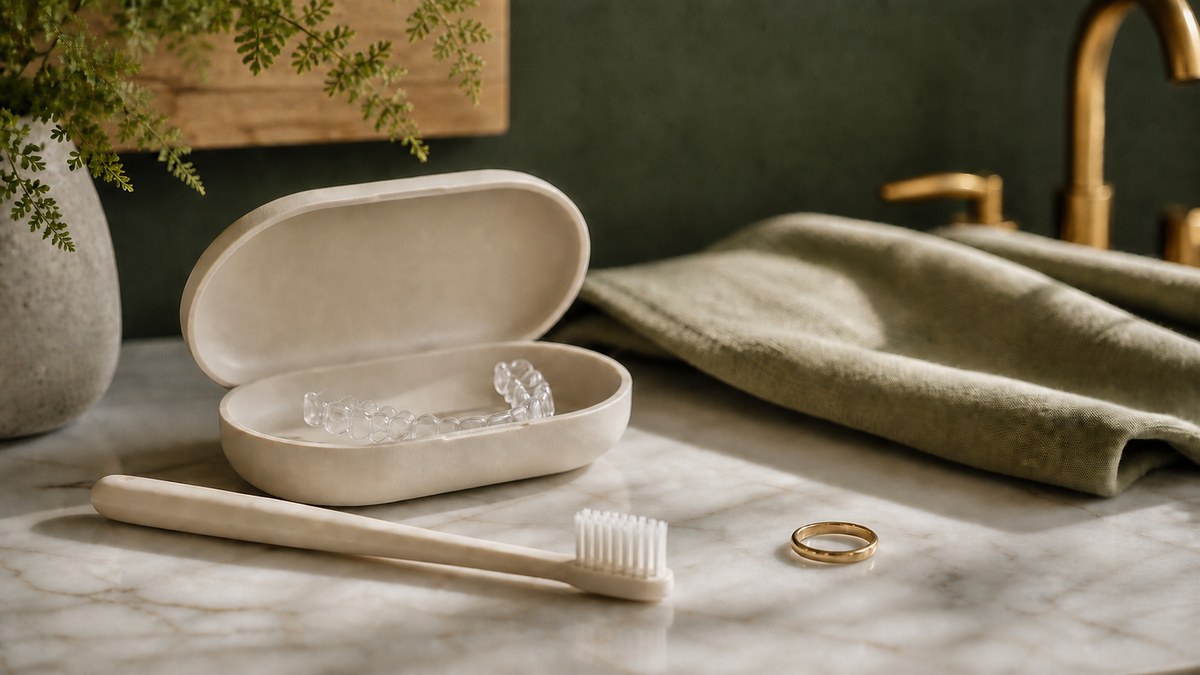


Can you eat with clear aligners in? No. Can you drink? Only plain water. That’s the whole rule, and it’s shorter than most people expect, which is precisely why it gets bent so often.
The reasoning behind it isn’t arbitrary. Eating with Invisalign trays in place risks four separate problems at once: staining the plastic, warping it with heat, trapping sugar and acid against enamel for hours, and cracking trays or attachments under chewing force. Any one of those is worth avoiding. Together they make the case clearly.
What follows are the questions patients at our Oakland, FL studio near Winter Garden actually ask about food and drink during treatment, answered in the order they tend to come up.
Why Does Everything Except Water Have to Come Out?
Four mechanisms, and they compound.
Staining. Aligner plastic is porous enough at a microscopic level to absorb pigment. Coffee, tea, red wine, cola, and richly colored sauces discolor trays within a single wear cycle. A stained tray is a visible tray, which defeats the main reason most adults choose aligners in the first place.
Heat distortion. Trays are thermoplastic. Hot coffee, hot tea, and hot soup can soften and deform them, and a deformed tray no longer matches the planned tooth positions. There’s no repairing it. The tray has to be replaced, which stalls the sequence.
Trapped sugar and acid. This one does the real damage. Normally saliva dilutes and buffers what you eat within minutes. A tray seals it against the enamel instead, extending a two minute acid exposure into a two hour one. That’s the mechanism behind most treatment-related cavities, and our walk through how tooth decay progresses shows what that repeated exposure builds toward.
Mechanical damage. Trays are engineered to deliver gentle pressure, not to take the load of chewing. Biting down on food through plastic can crack a tray and can shear an attachment off a tooth, both of which delay treatment while replacements are made. If you want the detail on what those attachments do and why losing one matters, our explanation of how clear aligners move teeth covers it.
What About Coffee and Tea?
Trays out, every time, hot or iced. Iced coffee removes the heat problem but not the staining or the sugar, and if it’s sweetened it’s a decay problem too.
The bigger issue with coffee is usually not chemistry but arithmetic. A cup nursed over two hours is two hours without trays, and a second cup in the afternoon can push a day below the wear target. If you’re a slow, all-morning coffee drinker, treatment will ask you to become a faster one. Drink it in a defined window, rinse with water afterward, brush when you can, and get the trays back in.
Black coffee and black tea are also among the more persistent staining agents for teeth themselves, not just trays. That matters more during aligner treatment because saliva clearance is reduced. If a whiter result is part of what you’re after, the sequencing advice in keeping teeth white after whitening is worth reading before you start, and the reasons enamel darkens in the first place are covered in what causes teeth to yellow.
What About Wine, Soda, and Sports Drinks?
Red wine is the worst case for trays: heavily pigmented and acidic at once. White wine skips the pigment but is more acidic than most people realize. Either way, trays out.
Soda combines sugar with phosphoric or citric acid, and diet versions keep the acid even without the sugar. Under a tray, that acid sits directly against enamel with nothing to wash it away. Sports and energy drinks are frequently worse than soda on both counts, and they’re often consumed slowly over an hour or more, which is the most damaging pattern possible. If you already have acid exposure from another source, the compounding effect is real, and our piece on how acid reflux damages teeth explains why repeated acid contact is so corrosive to enamel.
One useful habit after anything acidic: rinse with water, wait twenty or thirty minutes, then brush. Enamel is temporarily softened right after an acid exposure, and brushing immediately scrubs away mineral you’d rather keep. Rinse first, get the trays back in once you have brushed.
Can I Chew Gum?
Not with trays in. Gum adheres to the plastic in a way that’s close to unfixable and stresses the trays while you chew.
Sugar-free gum with the trays out is a different story and is worth doing. It stimulates saliva flow, which helps counteract the reduced saliva contact your teeth get during treatment. Just brush before reinserting.
Does Snacking Really Matter That Much?
More than most people expect, for two separate reasons.
Wear time. The target for most cases is twenty to twenty two hours a day, which leaves roughly two hours for everything. Each eating episode costs the time you’re eating plus the time to brush and reinsert. Three meals fit that budget comfortably. Three meals plus four snacks does not, and the shortfall shows up as teeth that stop keeping up with the trays. Our piece on what happens when aligner wear slips covers where that leads.
Decay risk. Each time you eat, oral bacteria produce acid and the pH around your teeth drops for a period afterward. Six eating episodes mean six acid cycles. Total sugar matters less than how often it arrives, which is why grazing is harder on teeth than a dessert with dinner.
The practical fix is consolidation. Fewer, more substantial eating occasions protect both budgets at once.
How Do I Handle This at a Restaurant or at Work?
The logistics are the part people actually struggle with, not the rules.
- Take the trays out before you sit down, in the restroom or the car, rather than at the table. It’s less conspicuous and less rushed.
- Always use the case. Trays wrapped in a napkin get thrown away with astonishing regularity. Replacing a tray costs time and money.
- Carry a kit. A folding brush, a travel toothpaste, and floss picks in a bag or a desk drawer make the routine possible anywhere.
- If you cannot brush, rinse hard and reinsert anyway. Lost wear time is harder to recover than a delayed brushing.
- Set eating windows at work. A defined lunch and a defined coffee break are far easier to sustain than grazing through the afternoon.
Why Do People Say They Lost Weight?
It comes up often enough to mention. The friction of removing trays, eating, brushing, and reinserting makes casual snacking inconvenient, and inconvenient behaviors get done less.
For some people that’s a welcome side effect. It’s worth being deliberate about it, though, so that meals stay adequate instead of getting skipped to protect wear time. Undereating to keep trays in isn’t a good trade. If you’re weighing whether this daily rhythm suits your life, that belongs in the initial conversation, along with everything else covered in our guide to clear aligner treatment for adults.
The Habits That Make It Work
The people who finish treatment with clean trays and no new cavities tend to share the same small set of behaviors: water only between meals, a fixed number of eating occasions, a brush kit within reach, and a case in every bag. None of it is difficult in isolation. It’s the consistency over twelve or eighteen months that produces the result, and it’s supported by the same daily standards described in our guide to hygiene during aligner treatment. Routine cleanings and exams through the case are how we catch a problem while it’s still small.
Ready to Talk About Whether Aligners Fit Your Routine
If the eating and drinking rules sound manageable, aligners are probably a good fit, and an exam will tell you whether they can do what your teeth need. Reach out to schedule a consultation, or join our VIP list to stay connected with the studio in Oakland, FL.