

Keeping teeth white after whitening comes down to three things: protecting the first 48 hours, adjusting a handful of daily habits, and doing short touch-ups a few times a year. Done consistently, that combination holds a professional result for one to three years, and often keeps it indefinitely.
The reason maintenance matters is that whitening doesn’t change your teeth permanently. It lifts stain out of the enamel, and the same foods, drinks, and habits that put stain there in the first place begin depositing it again the day you finish. Nothing has gone wrong when that happens. It’s the expected behavior of a porous mineral surface.
What follows is what actually preserves the result, in rough order of how much difference it makes. It’s the same guidance we give patients at our Oakland, FL studio when they finish a whitening course.
The First 48 Hours Matter Most
Immediately after whitening, enamel is temporarily more porous than usual. The pores that let peroxide in also let pigment in, which makes this window disproportionately important.
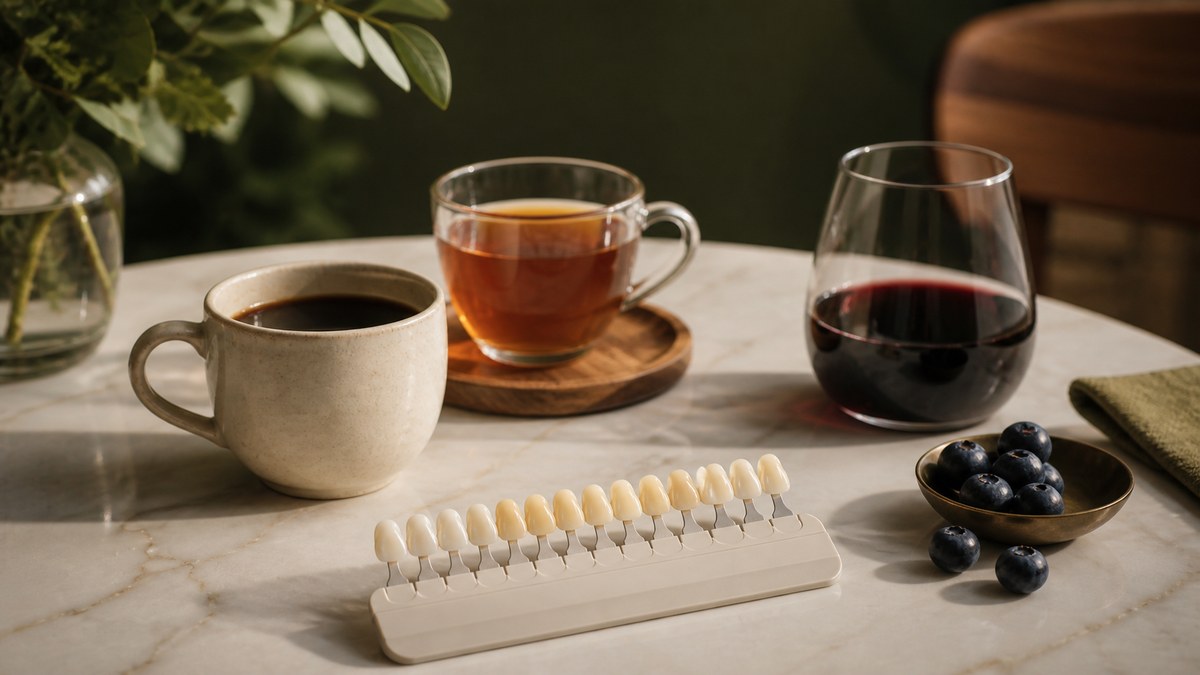
For about two days, avoid:
- Coffee, tea, and cola
- Red wine and dark juices
- Berries, beets, and tomato sauce
- Soy sauce, balsamic vinegar, and curry
- Tobacco in any form
The simplest test is whether something would stain a white shirt. If it would, skip it for two days. Water, milk, chicken, fish, rice, pasta, and cauliflower are all fine, and this is the one stretch where being strict pays off out of proportion to the effort.
Sensitivity is also common in this period. It’s temporary, and a potassium nitrate sensitivity toothpaste used for a few days usually handles it.
Habits That Keep Teeth White After Whitening
After the first two days you don’t have to give up coffee or red wine. You do have to change how you consume them.
- Drink in one sitting rather than sipping. A cup of coffee finished in ten minutes deposits far less stain than the same cup nursed over two hours. Duration of contact matters more than volume.
- Use a straw for cold, dark drinks. Iced coffee, cola, and juice can be routed past the front teeth. This does nothing for hot drinks, which nobody sips through a straw.
- Rinse with water afterward. A swish clears pigment before it settles and helps neutralize acidity.
- Wait to brush after acidic drinks. Enamel is briefly softened by acid, and brushing straight away abrades it. Rinse immediately, brush about thirty minutes later.
- Add milk to coffee and tea. It lightens the pigment load, and the casein in milk binds some staining compounds.
- Stop tobacco. Nothing else on this list comes close. Tar produces a stain that’s both fast and stubborn.
Acidity deserves its own note. Anything that softens enamel makes it easier to stain, which is why frequent citrus, sparkling water, and soda work against you even when they’re not dark. The same mechanism that drives acid erosion from reflux applies to what you drink. If you wear clear aligners, the rules get stricter, since everything but plain water belongs outside the trays.
Touch-Ups Are the Real Maintenance Tool
This is the part most people skip, and it’s the part that separates a result lasting six months from one lasting three years.
If you whitened with custom trays, keep them. One or two nights of gel every three to six months is usually enough to hold the shade. That’s a fraction of the exposure of a full whitening course, so it’s gentler on sensitivity and on the gums.
If you had in-office whitening, ask about a set of take-home trays for exactly this purpose. The in-office visit does the heavy lifting; the trays protect the investment.
A caution worth stating plainly: more isn’t better. This is the trap people fall into with drugstore whitening strips, running course after course against a ceiling the material was never going to pass. Teeth reach a natural ceiling, and gel used past that point produces sensitivity and gum irritation without additional whiteness. Touch up on a schedule, not on impulse. Our comparison of teeth whitening options covers how the different systems differ in strength and what each one is suited to.
What Whitening Toothpaste Can and Cannot Do
Most whitening toothpastes work by abrasion. They scrub away surface film, which helps preserve a result but can’t create one. A few contain low concentrations of peroxide, which has a mild true whitening effect over weeks.
Two cautions. Heavily abrasive formulas dull the polish on composite and porcelain, and over years they contribute to enamel wear at the gum line. Look for a lower-abrasion product, use it as part of normal brushing, and don’t scrub harder in the belief that it helps. It doesn’t.
Remember That Restorations Do Not Change
Whitening gel affects natural tooth structure only. Crowns, veneers, and composite fillings keep whatever shade they were made in.
This matters in both directions. If you have visible restorations, they may look darker once the surrounding teeth lighten, and matching them can mean replacing them. And if you’re planning any cosmetic work, whiten first, wait about two weeks for the shade to stabilize, then have the new restorations matched to the final result. Doing it in the opposite order locks you into your current color.
Saliva Does More Work Than Any Product
Saliva continually rinses pigment off enamel, buffers acid, and redeposits minerals. Anything that reduces it accelerates staining, which is why dry mouth is one of the more overlooked causes of a whitening result fading fast.
Common contributors include antihistamines, antidepressants, blood pressure medications, mouth breathing, and simple dehydration. If your mouth is regularly dry, drinking water through the day and asking about a saliva-supporting rinse will do more for your shade than switching whitening brands. Our look at dry mouth and tooth decay covers why the same conditions that speed staining also raise cavity risk.
Keep Your Cleanings
Professional cleanings remove the hardened deposits and surface film that no home routine reaches. For most people, a cleaning alone visibly brightens teeth by clearing extrinsic stain, and it resets the surface so touch-up gel works evenly. It’s the least glamorous item on this list and one of the most effective.
When Relapse Signals Something Else
If your result faded within weeks rather than months, the cause is worth investigating. Rapid relapse can point to heavy daily staining, tobacco, or discoloration that was never surface stain to begin with. Dark shading from an old trauma, certain medications, or naturally yellowing dentin behaves differently and responds poorly to peroxide, and the different causes of yellowing each set their own ceiling on what whitening can reach. Repeating the whitening won’t fix it, but knowing what you’re dealing with changes the plan.
Ready to Protect the Result You Paid For
If you’ve whitened and want the shade to hold, or you’re planning to whiten and want to start with a maintenance plan already in place, we’re glad to walk you through it. Reach out to schedule a visit, or join our VIP list to stay connected with the studio.