

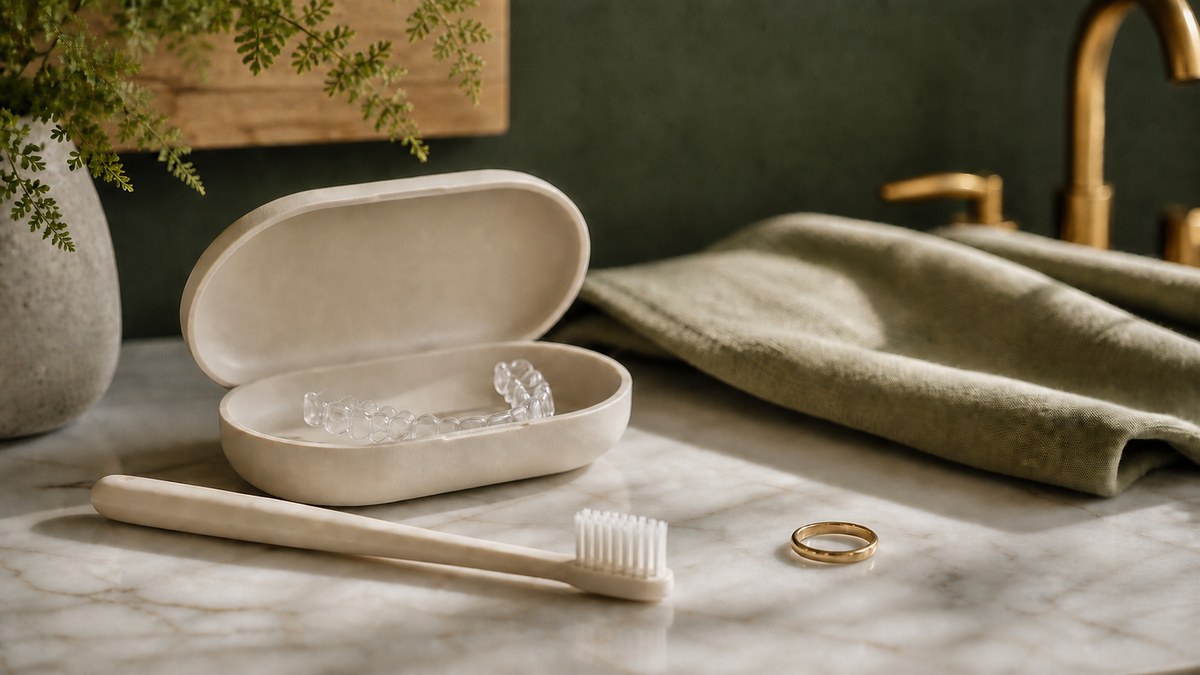
The tray is a sealed environment. That’s the whole reason Invisalign oral hygiene works differently from ordinary daily care: whatever is sitting on your teeth when you snap a tray in stays there, held against the enamel, until the tray comes out again.
Under normal conditions saliva is constantly washing over your teeth, diluting acids, buffering pH, and delivering calcium and phosphate back into the enamel surface. Cover the teeth in a close-fitting plastic shell and much of that protection is blocked. Sugar from a coffee, acid from a soda, plaque you didn’t quite brush off, all of it sits undisturbed for hours at a time.
That doesn’t make clear aligners bad for your teeth. Plenty of people finish treatment with healthier mouths than they started with, partly because the routine forces them to brush more. But it does mean the standard rises during treatment, and the people who get into trouble are almost always the ones who kept their old habits. Here’s what changes, and what we ask patients at our Oakland, FL studio near Winter Garden to actually do.
Why the Standard Goes Up
Three things happen once trays are in the picture.
Saliva stops reaching the tooth surface. The buffering and remineralizing work described above simply doesn’t happen where plastic sits. The teeth spend twenty two hours a day in a lower protection state than they’re used to.
Everything gets a longer contact time. A sip of sweetened iced tea normally clears in minutes. With a tray in, that sugar is trapped in a thin film against the enamel and the bacteria in your plaque keep producing acid the entire time. This is the mechanism behind most aligner-related decay, and it’s covered in more detail in our look at how tooth decay progresses.
Attachments add hiding places. The small tooth-colored bumps bonded to your teeth are what give trays something to grip, and they also create ledges and corners that plaque loves. White spots and gum inflammation cluster around them in patients who brush casually.
None of this is dangerous on its own. It becomes a problem when it runs for twelve or eighteen months.
The Routine That Actually Works
The short version: brush after you eat, clean between your teeth daily, and never put a tray over an unbrushed tooth.
- Brush before every reinsertion. After meals and after anything with sugar or acid in it. If you’re somewhere without a sink, rinse hard with water and brush the moment you can.
- Keep a kit with you. The habit fails on logistics far more often than on willpower. A brush and small toothpaste in a bag or desk drawer solves most of it.
- Floss once a day at minimum. Contact areas between teeth are where cavities start, and a tray does nothing to protect them. Do this before the tray goes in for the night.
- Give attachments extra attention. Angle the brush to sweep around each bump rather than across it.
- Don’t skip fluoride. A fluoride toothpaste, and sometimes a prescription-strength one during treatment, is the main tool for keeping enamel remineralizing under adverse conditions. Our explanation of how fluoride actually protects enamel covers the mechanism.
A powered brush earns its place here more than in ordinary care, mostly because the timer and pressure sensor keep people honest when they’re brushing five or six times a day. Our comparison of electric and manual toothbrushes goes through what the evidence supports and what it doesn’t.
Cleaning the Trays Themselves
Trays develop their own film. Left alone, they cloud, smell, and become a reservoir that reintroduces bacteria to clean teeth. The rules are simple and the mistakes are consistent.
Do this: rinse each tray the second it comes out, before saliva dries into a haze. Brush it gently with a soft brush using plain water or a small amount of clear, unscented liquid soap. Soak it in a product made for clear aligners or retainers a few times a week, then rinse well. Store it dry in its case, never in a napkin.
Avoid these:
- Hot water. Heat warps thermoplastic permanently. That includes boiling, dishwashers, and a tray left on a dashboard in a Florida summer. A warped tray doesn’t deliver the planned forces and may not seat at all.
- Toothpaste. The abrasives that polish enamel scratch soft plastic, and scratches hold stain and bacteria. Whitening formulas are the worst offenders.
- Colored or scented soaps. Dyes tint the plastic and fragrances linger in it. Clear and unscented is the rule.
- Denture tablets not labeled for aligners. Denture products are formulated for acrylic, and some cloud or chemically attack aligner material. Use a cleaner that names clear aligners or retainers on the package.
- Mouthwash soaks. Colored rinses stain trays, and alcohol-containing ones can craze the surface.
The Two Problems We Watch For
Decalcification and white spots
White spot lesions are the first visible stage of decay, chalky opaque patches where acid has pulled mineral out of enamel without yet cavitating it. They’re the classic complication of orthodontic treatment of any kind, and in aligner cases they often appear as halos around attachment sites or along the gum line where the tray edge sits.
Caught early, a white spot can often be arrested and partially remineralized with fluoride, better plaque control, and time. Left to progress, it becomes a cavity that needs a filling, and even an arrested lesion can leave a permanent cosmetic mark on a front tooth. It’s a discouraging outcome after paying for a straighter smile, and it’s largely preventable.
Gum inflammation
Puffy, red, bleeding gums show up in aligner patients for the same reason they show up in anyone: plaque left along the gum line. Trays add a mechanical factor, since the tray edge can sit right at the margin and press plaque into the sulcus.
Bleeding when you brush isn’t normal at any point in treatment. It’s also worth knowing that inflamed, swollen tissue can subtly change how teeth respond to force, which is a practical reason as well as a health one to keep gums quiet. The wider picture of which bacteria live where and why that balance matters is worth reading in our piece on the oral microbiome.
Dry Mouth Deserves Real Attention
Reduced saliva contact under trays is compounded for anyone who already runs dry, whether from medications, mouth breathing, or medical conditions. Since saliva is the primary defense against decay, this combination raises risk substantially, and the relationship between dry mouth and tooth decay is one of the better established ones in dentistry.
Practical steps: drink plain water constantly, and note that water is the only thing you can drink with trays in. Avoid alcohol-heavy mouthwashes, which dry tissue further. Sugar-free xylitol lozenges between trays can stimulate flow. Mention any dry mouth medications at your visits so we can adjust fluoride recommendations accordingly.
Travel, Work, and Real Life
Most hygiene failures are situational. A wedding, a work trip, a long restaurant dinner, and suddenly the tray has been out for four hours or back in over an unbrushed mouth.
Build a small kit and keep it in whatever bag you carry: folding toothbrush, travel toothpaste, floss picks, tray case, a small bottle of clear soap, and your next tray sealed in its bag in case a tray cracks away from home. A bottle of water covers rinsing when there’s no sink. None of this is complicated, and it’s the difference between a clean twelve months and a set of white spots.
If you’re weighing whether the daily discipline fits your life, that’s a reasonable thing to talk through before starting, alongside everything else covered in our guide to clear aligner treatment for adults. The hygiene commitment doesn’t end when the last tray comes out, either, since retainers carry the same cleaning rules for years afterward. Regular professional cleanings and exams through treatment are how problems get caught while they’re still reversible.
Ready to Talk About Aligner Treatment
If you’re considering clear aligners, or you’re partway through a case and worried about how your teeth are holding up, an exam gives you real information rather than guesswork. Reach out to schedule a visit, or join our VIP list to stay connected with the studio in Oakland, FL.