

Professional whitening lifts tooth color by breaking down pigment molecules inside enamel and dentin with peroxide, and every legitimate method uses the same chemistry. What differs between them is concentration, contact time, and how well the gel actually reaches your teeth. That’s the useful framework for anyone comparing teeth whitening Oakland FL options, because it explains why a strip and a custom tray can contain similar ingredients and produce very different results.
Whitening is also the most conservative cosmetic treatment available. Nothing is drilled, nothing is bonded on, and if you’re unhappy with the shade you simply stop and it fades. That makes it the sensible first step for anyone whose only complaint is color.
Here’s how the three practical routes compare, and what determines whether whitening will work for your particular staining.
Teeth Whitening in Oakland, FL: The Three Real Options
In-office whitening
A high-concentration peroxide gel is applied with your gums isolated by a protective barrier, usually in two or three cycles across a single appointment. It produces the largest change you can get in one sitting, which is why people choose it before a wedding or an event with little notice.
The trade-offs are cost and sensitivity. In-office treatment is the most expensive per shade gained, and the higher concentration makes short-term cold sensitivity more likely. Most practices, ours included, send you home with trays anyway to hold the result, so in-office whitening is often better understood as a fast start rather than a complete solution.
Custom take-home trays
Impressions or a digital scan produce trays molded precisely to your teeth. You wear a lower-concentration gel for a set period each day over roughly one to two weeks. Because the tray seals the gel against the tooth and keeps saliva out, the gel works efficiently despite the lower strength.
For most people this is the best value in whitening. The end result is comparable to in-office treatment, sensitivity is easier to control because you can shorten wear time or skip a night, and the trays remain yours for touch-ups for years. The only real drawback is that it takes patience. Anyone who has worn aligner trays will recognize the routine, though aligner trays raise the bar on daily hygiene in a way whitening trays don’t.
Over-the-counter strips and kits
Strips carry the lowest peroxide concentration and no custom fit. They can help with mild surface staining and cost the least by a wide margin. What they can’t do is adapt to tooth shape, so gel coverage is uneven, and crowded areas, edges, and back teeth commonly stay darker. Whitening toothpastes are a different category entirely, since most work by abrasion and polishing rather than bleaching, and abrasive pastes used aggressively can thin enamel over years.
If cost is the deciding factor, strips are a reasonable place to begin. Just measure the result honestly before spending repeatedly on them. We covered whether whitening strips are actually safe separately, including the gum irritation that comes from a tray that doesn’t fit.
What Determines Whether Whitening Will Work
Not all discoloration is the same, and the type you have predicts the outcome better than the product you choose.
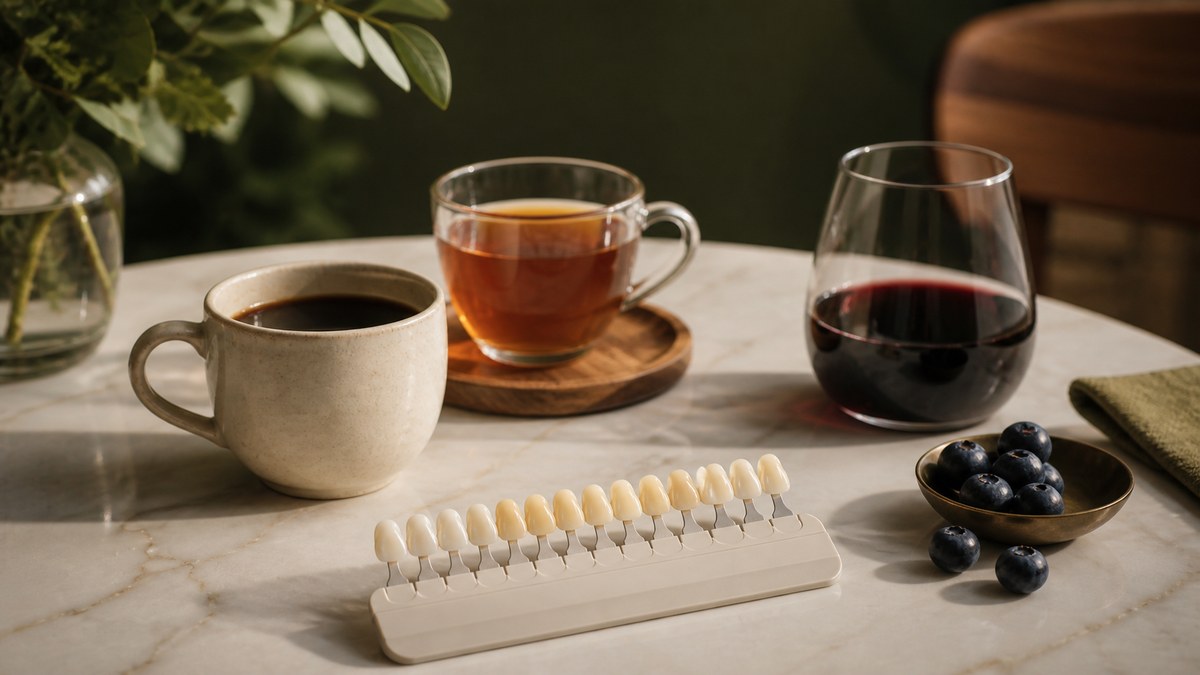
- Yellow and brown staining responds well. This is the ordinary accumulation from age, coffee, tea, red wine, curry, and tobacco, and it’s exactly what peroxide is good at.
- Gray tones respond poorly. Tetracycline staining and teeth that darkened after nerve death often need bonding or a veneer to look right, though extended whitening can help a little.
- White spots don’t disappear. Whitening lifts the surrounding tooth, so the spots may become less obvious, but they can also look more distinct at first before the shade evens out.
- Restorations don’t change at all. Crowns, fillings, bonding, and veneers keep their original shade. If you plan any front-tooth restorative work, whiten first and match to the final shade afterward.
- Surface stain isn’t always stain. Some darkening is thinning enamel letting yellow dentin show through, which whitening can’t reverse. Sorting out what actually causes teeth to yellow is what tells you whether peroxide will do anything at all. Erosion and worn enamel need protection rather than bleaching.
Managing Sensitivity
Temporary cold sensitivity is the most common side effect and the main reason people abandon whitening halfway. It happens because peroxide briefly increases enamel permeability and reaches the dentin tubules, and it resolves within a few days once treatment ends.
The measures that actually help:
- Shorten the wear time rather than pushing through. Thirty minutes nightly for longer beats two hours with pain.
- Alternate nights instead of whitening daily.
- Use prescription-strength fluoride toothpaste for a week before starting, applied at night and not rinsed away.
- Ask about a desensitizing gel with potassium nitrate to wear in the trays on off nights.
- Skip acidic drinks during the course, since softened enamel and acid together increase discomfort.
If sensitivity is sharp, localized to one tooth, or lasts beyond a few days, that’s worth examining rather than tolerating. It may point to one of the other common causes of tooth sensitivity that whitening simply revealed.
What to Expect From the Result
Shade change is easier to promise than to measure, so set expectations against a shade guide rather than against memory. Most people gain several shades on a standard guide, and the first shades come quickly while the last ones come slowly. Teeth also look temporarily lighter for the first few days after whitening because the enamel is slightly dehydrated, then settle to their true shade over about two weeks. Judging the outcome on day two almost always overstates it.
Uneven results are normal along the way. Enamel thickness varies across a tooth, so the biting edges usually lighten first and the area near the gum lags behind, and canines are naturally darker than incisors and take longer. Continuing the course evens most of this out, which is another argument for tray whitening over a single fast appointment.
Holding the Result
Whitening fades. Expect six months to two years depending on habits, and plan for maintenance rather than a repeat course. Our guide to keeping teeth white after whitening covers what actually extends that window.
- Rinse with water after coffee, tea, or red wine instead of brushing right away, since enamel is briefly softened by acidic drinks.
- Use a straw for iced coffee and dark sodas so the liquid bypasses the front teeth.
- Keep your custom trays. Two or three touch-up nights a few times a year hold the shade for a fraction of the original cost.
- Continue regular cleanings, since professional polishing removes the surface film that dulls the result.
When Whitening Is Not the Answer
If the shape of your teeth bothers you as much as the color, whitening alone will disappoint. Chips, worn edges, uneven lengths, and old discolored bonding need restorative solutions, and in those cases whitening becomes step one of a larger sequence rather than the whole plan. When that sequence starts with straightening the teeth, the six to eighteen months a typical adult aligner case takes usually sets the schedule. Our comparison of porcelain and composite veneers covers what happens after whitening when shape is also an issue, and the complete cosmetic dentistry guide explains how the steps sequence together.
Active decay, gum inflammation, and untreated cracks all need attention before whitening. Peroxide on inflamed gums is uncomfortable, and whitening a tooth that needs restorative work only means matching new work to a shade that will fade.
Ready to Whiten With a Plan Behind It
A short exam tells us what kind of staining you have, whether whitening will actually solve it, and which method makes sense for your sensitivity and your timeline. Reach out to schedule a visit, or join our VIP list to stay connected with our studio.